Zero-Trust AI Gateway (Secure API + Model Filters)
A zero-trust API gateway for AI endpoints enforcing fine-grained policies, content filters, rate limits, and model-aware routing.
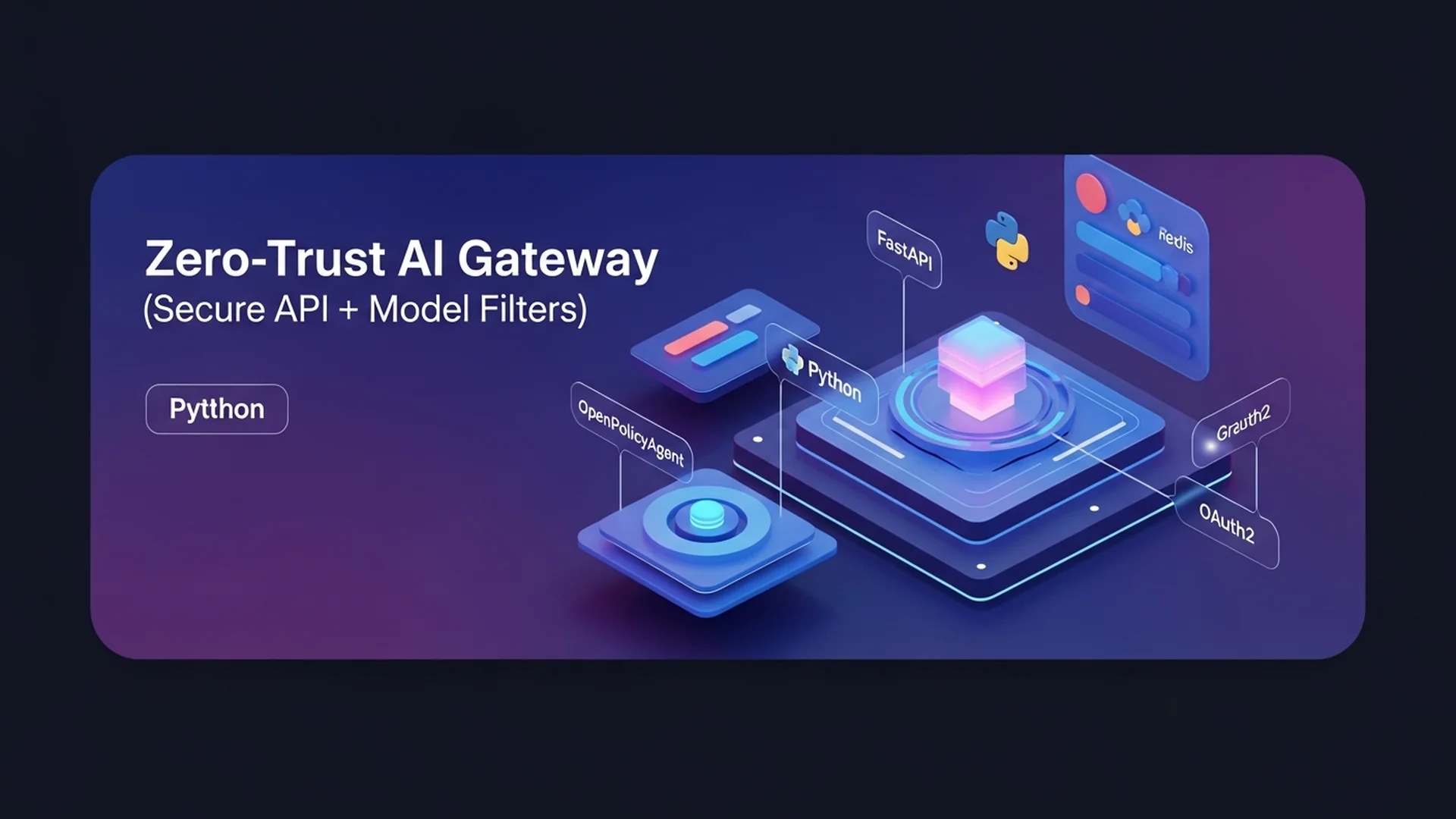
With AI integrations widespread in 2024–2025, organizations need robust API controls for prompt inputs and model outputs. The Zero-Trust AI Gateway provides per-tenant policy enforcement, content filtering (toxicity, PII detection), rate limiting, and dynamic routing to approved models or safe fallbacks. Built as a FastAPI-compatible gateway and sidecar, it reduces attack surface and enforces compliance while allowing product teams to use LLM features safely.
SEO keywords: zero-trust API gateway, AI security gateway, model filtering, content moderation, LLM API gateway.
Core features include request/response inspection, model-aware routing (send risky queries to conservative models), token and cost tracking, and an audit trail for all AI requests. The gateway supports pluggable filters—LLM-based safety checks, regex/heuristic detectors, and third-party moderation APIs—and integrates with identity layers (OAuth2, mTLS) for zero-trust posture.
Feature table:
| Feature | Benefit | Notes |
|---|---|---|
| Content inspection | Reduce harmful outputs | LLM + heuristic filters |
| Policy engine | Enforce tenant rules | Granular RBAC & rules |
| Cost tracking | Monitor usage | Per-tenant billing hooks |
| Model routing | Safer fallbacks | Multi-model orchestration |
Implementation steps
- Implement gateway sidecar with FastAPI that intercepts AI requests and performs preflight checks.
- Add modular filters for PII detection, toxicity scoring, and disallowed content.
- Build routing logic to dynamically select models based on rules, cost, or confidence scores.
- Instrument auditing and billing hooks for transparency and chargebacks.
- Integrate identity and secrets management for service-to-service authentication.
Challenges and mitigations
- Latency overhead: filtering and routing add latency; mitigated with async pipelines and optimistic fast-path for benign requests.
- Evolving safety needs: plug-in based filters and safe fallback models allow rapid updates to policy logic.
- Tenant isolation: strict tenancy and per-tenant config prevent cross-tenant policy leakage.
- Model misclassification: ensemble-based safety checks reduce false negatives and provide explainable signals for operators.
Why it matters
As companies ship AI features, regulatory scrutiny and user safety concerns require hardened controls. This gateway provides an operational safety net that enforces policies, reduces risky outputs, and provides auditability—critical for compliance and trust. SEO content about AI API security and zero-trust integration is highly relevant to platform engineers and security leads evaluating AI deployments.